A) TVC - MC.
B) 
C) 
D) 
F) None of the above
Correct Answer

verified
D
Correct Answer
verified
A) 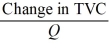
B) 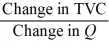
C) 
D) 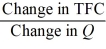
F) None of the above
Correct Answer
verified
Correct Answer
verified
A) the fact that the principal objective of most corporations is to make profits and not to contribute to charity.
B) a conflict of interest between corporate executives who manage the firm and stockholders who own the firm.
C) the view that workers are agents who are not considered to be the principal asset of the corporations for which they work.
D) a perspective that corporations are agents that represent the principal source of power for government and the national economy.
F) A) and C)
Correct Answer
verified
Correct Answer
verified
A) TVC - MC.
B) 
C) 
D) 
F) A) and B)
Correct Answer
verified
Correct Answer
verified
A) All fixed costs are sunk costs.
B) Sunk costs are important in business decisions because they need to be recovered.
C) Sunk costs are unrecoverable and therefore shouldn't influence economic decisions.
D) All expenditures, once made, represent sunk costs.
F) All of the above
Correct Answer
verified
Correct Answer
verified
A) Alyssa's explicit costs are $67,000 and her implicit costs are $85,000.
B) Alyssa's implicit costs are $67,000 and her economic profits are $93,000.
C) Alyssa's accounting profits are $8,000 and her economic profits are $75,000.
D) Alyssa's explicit costs are $85,000 and her accounting profits are $75,000.
F) A) and D)
Correct Answer
verified
Correct Answer
verified
A) as extra units of a variable resource are added to a fixed resource, marginal product will decline beyond some point.
B) because of economies and diseconomies of scale, a competitive firm's long-run average total cost curve will be U-shaped.
C) the demand for goods produced by purely competitive industries is downsloping.
D) beyond some point, the extra utility derived from additional units of a product will yield the consumer smaller and smaller extra amounts of satisfaction.
F) A) and C)
Correct Answer
verified
Correct Answer
verified
A) Automobile manufacturers.
B) Software companies.
C) Oil refineries.
D) Hair salons.
F) A) and C)
Correct Answer
verified
D
Correct Answer
verified
A) $50,000.
B) $5,000.
C) $35,000.
D) $85,000.
F) A) and B)
Correct Answer
verified
Correct Answer
verified
A) ATC, MC, AFC, and AVC curves respectively.
B) MC, AFC, AVC, and ATC curves respectively.
C) MC, ATC, AVC, and AFC curves respectively.
D) ATC, AVC, AFC, and MC curves respectively.
F) A) and B)
Correct Answer
verified
Correct Answer
verified
A) $61.
B) $48.
C) $37.
D) $24.
F) B) and C)
Correct Answer
verified
Correct Answer
verified
A) Alyssa is incurring economic losses, so we would expect her to close her business.
B) Alyssa is earning economic profits, so we would expect her to remain in business.
C) Alyssa's economic profits are greater than her accounting profits.
D) Alyssa would be better off working for the competing bakery.
F) None of the above
Correct Answer
verified
Correct Answer
verified
A) Alyssa's explicit costs are $67,000 and her implicit costs are $85,000.
B) Alyssa's implicit costs are $67,000 and her economic profits are $93,000.
C) Alyssa's accounting profits are $75,000 and her economic profits are $8,000.
D) Alyssa's explicit costs are $85,000 and her accounting profits are $8,000.
F) A) and D)
Correct Answer
verified
Correct Answer
verified
A) the change in marginal cost.
B) TVC - TFC.
C) TFC + TVC.
D) 
F) None of the above
Correct Answer
verified
C
Correct Answer
verified
A) Because large-scale production allows the realization of economies of scale, the real costs of production vary directly with the level of output.
B) Population growth automatically adjusts to that level at which the average product per worker will be at a maximum.
C) As successive amounts of one resource (labor) are added to fixed amounts of other resources (capital) , beyond some point the resulting extra output will decline.
D) Proportionate increases in the inputs of all resources will result in a less-than-proportionate increase in total output.
F) B) and C)
Correct Answer
verified
Correct Answer
verified
Showing 1 - 15 of 15
Related Exams