A) calcium dichloride
B) dicalcium trichloride
C) dicalcium chloride
D) calcium chloride
E) dicalcium dichloride
G) B) and E)
Correct Answer

verified
Correct Answer
verified
A) 6
B) 18
C) 21
D) 32
E) 62
G) All of the above
Correct Answer
verified
Correct Answer
verified
A) Mg3P2
B) MgPO4
C) Mg3(PO4) 2
D) Mg2(PO4) 3
E) MgHPO4
G) D) and E)
Correct Answer
verified
Correct Answer
verified
A) 
B) 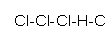
C) 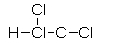
D) 
E) 
G) A) and B)
Correct Answer
verified
Correct Answer
verified
A) N2
B) NaCl
C) H2O
D) CO
E) Li2O
G) A) and E)
Correct Answer
verified
Correct Answer
verified
A) a double bond
B) a triple bond
C) a single electron
D) a lone pair of electrons
E) None of the above
G) C) and D)
Correct Answer
verified
Correct Answer
verified
A) I and II
B) III only
C) IV only
D) I, II, and III
E) All of these molecules have an expanded octet.
G) B) and E)
Correct Answer
verified
Correct Answer
verified
A) +3
B) +1
C) 0
D) (1)
E) (3)
G) A) and E)
Correct Answer
verified
Correct Answer
verified
A) potassium
B) hydrogen
C) fluorine
D) carbon
E) oxygen
G) None of the above
Correct Answer
verified
Correct Answer
verified
A) Tamoxifen has the same structure as estradiol.
B) Tamoxifen has the same number of atoms as estradiol.
C) Tamoxifen performs the same function in the cell as estradiol.
D) Tamoxifen binds to the same receptor as estradiol.
E) Tamoxifen deforms the shape of the estrogen receptor in the same way as estradiol.
G) A) and C)
Correct Answer
verified
Correct Answer
verified
A) Nitrogen is trigonal planar and carbon is tetrahedral.
B) Carbon is tetrahedral and nitrogen is bent.
C) Nitrogen is trigonal pyramidal and carbon is tetrahedral.
D) Carbon is linear and nitrogen is tetrahedral.
E) Both of them are tetrahedral.
G) B) and C)
Correct Answer
verified
Correct Answer
verified
A) C-H and O-H only
B) C-O and O-H only
C) C-O only
D) C-C and C-O
E) O-H only
G) All of the above
Correct Answer
verified
Correct Answer
verified
A) 0
B) 1
C) 2
D) 3
E) 4
G) B) and D)
Correct Answer
verified
Correct Answer
verified
A) No, all polarities cancel out.
B) Yes, all molecules with polar bonds are polar.
C) No, the bonds in chloroform are not polar.
D) Yes, the polarities do not cancel out.
E) No, carbon compounds cannot be polar.
G) A) and D)
Correct Answer
verified
Correct Answer
verified
A) 1 Li:1 O
B) 2 Li:1 O
C) 2 O:1 Li
D) 4 O:5 Li
E) 4 Li:5 O
G) A) and B)
Correct Answer
verified
Correct Answer
verified
A) relative atom size
B) relative bond length
C) relative bond strength
D) bond angle
E) atom identity
G) D) and E)
Correct Answer
verified
Correct Answer
verified
A) cation
B) anion
C) ionic bond
D) covalent bond
E) salt
G) A) and B)
Correct Answer
verified
Correct Answer
verified
A) become an anion.
B) ionize.
C) draw electrons to itself in a covalent bond.
D) accept an electron from a metal.
E) donate an electron to a nonmetal.
G) A) and C)
Correct Answer
verified
Correct Answer
verified
A) one large atom and one small atom.
B) an even distribution of charge.
C) a positive or negative charge.
D) a more positive side and a more negative side.
E) only polar atoms.
G) A) and B)
Correct Answer
verified
Correct Answer
verified
A) C-C
B) C-H
C) O-Cl
D) Cl-Cl
E) Mg-Cl
G) B) and E)
Correct Answer
verified
Correct Answer
verified
Showing 101 - 120 of 164
Related Exams